Sunday, August 31, 2014

DESCRIBING PEOPLE

To: 8A, 8C and 8D


Psychological Description: What are people like? (¿cómo es?)

 What is she like?   /   What is he like   /   What are they like?
She is…                       /    he is…                      / they are …

Use verb TO BE to Psychological Descriptions.

What is Susan like?
-Susan is intelligent, hardworking and adventurous. She isn´t noisy.
What is Pere like?
-Pere is funny and curious. He isn´t rude.
What are Kev and Trev like?
-Kev and Trev are noisy and disorganised. They aren´t sensible.

-Susan is intelligent and adventurous, but sometimes selfish.
-Pere is funny and curious, but sometimes two-faced.
-Kev and Trev are noisy and disorganised, but generous.


What does he/she look like? (¿cómo es su apariencia?)
Use verbs:BE / HAVE (have got) / WEAR to Physical Descriptions.
She/ he is…                       /   she / he has…                      / she / he wears …

Use verbs:BE / HAVE (got) to describe appearance of people (height, weight, age):
She / he is + adjective  --> He/she is tall / short.
                                                He/she is fat / skinny.
                                                He/she is is bald.

She / he has (got) + adjective + Noun -> He/she has a mustache / a beard.

                                                                           He/she has a piercing / a tattoo.
To describe hair:
She / he has + (long+style+color) + hair -> He/she has long blonde hair.
                                                                               He/she has short curly red hair.
To describe eyes:
She / he has + (size+color) + eyes->He/she has big blue eyes.

Use verb to WEAR to describe clothing or accessories:                                                      glasses
contact lenses
earrings
a necklace
a wristband
a bracelet
a cap / hat
a red scarf
a tie  

He / she wears glasses / contacts / braces.
He / she wears earrings / a hat / a necklace / a bracelet / a ring.

Activity:
Read the description below and learn the new vocabulary.


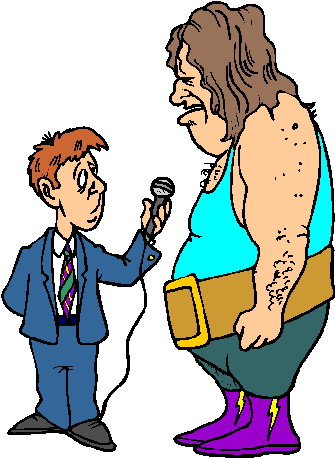
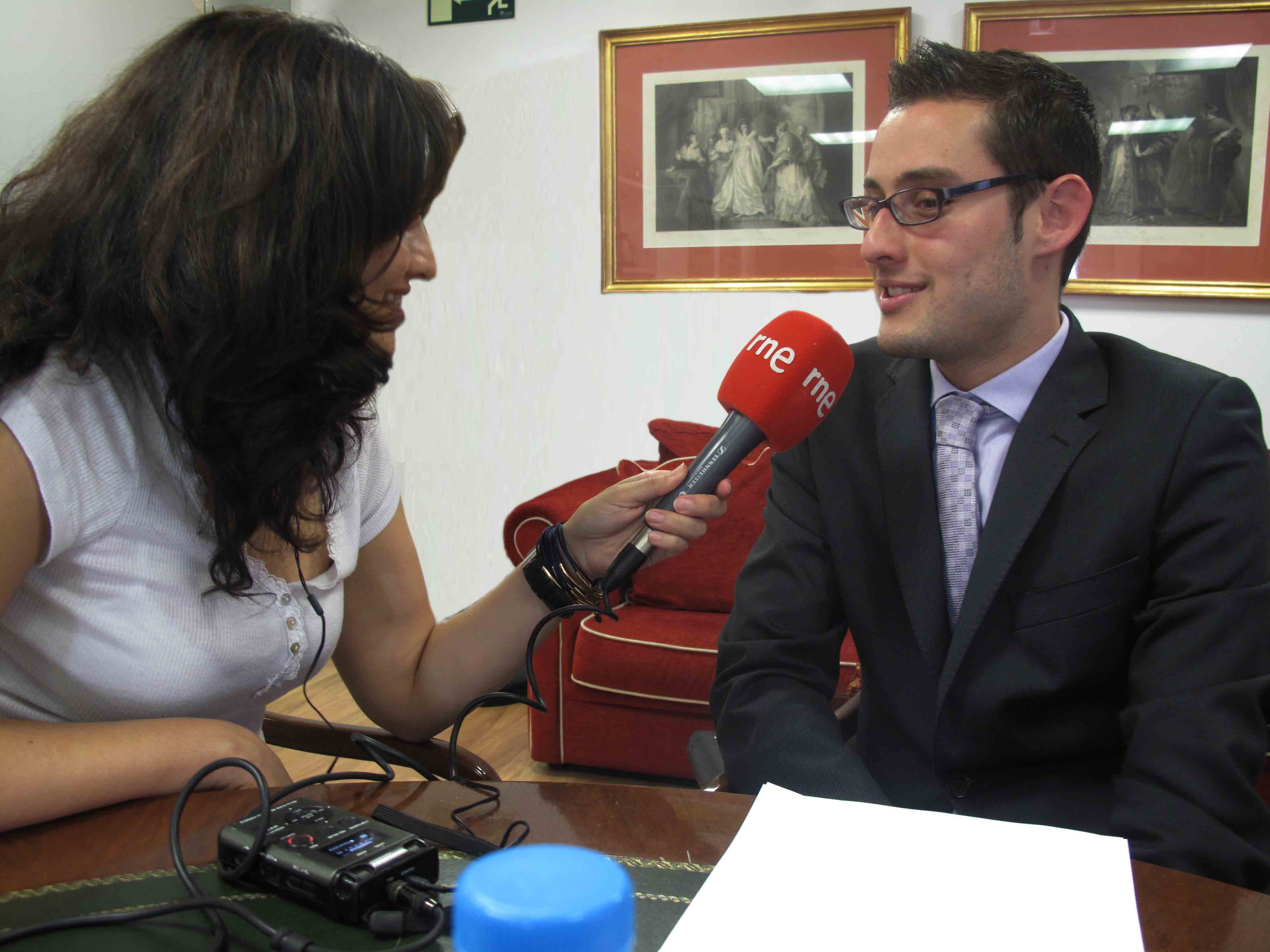
LA ENTREVISTA

Para: 7A, 7B y 7C

El concepto de entrevista hace referencia a la comunicación que se constituye entre el entrevistador y el entrevistado.

La entrevista periodística es un diálogo entre un periodista y un sujeto, transcrito en forma de preguntas y respuestas o en bloques descriptivos con frases entrecomilladas.

Funciones de la entrevista periodística:
   -> Informar
   -> Orientar
   -> Educar y enseñar
   -> Entretener
   -> Promocionar y/o vender

De acuerdo con el fin principal que se persigue en una conversación periodística, la entrevista se clasifica en:
§  Entrevista noticiosa o de información: se forma a partir de temas específicos con el fin de obtener y publicar un material extenso sobre determinado asunto.
§  Entrevista de opinión: sirve para recoger comentarios, opiniones y juicios de personajes sobre noticias del momento o sobre temas de interés permanente.
§  Entrevista de semblanza: se realiza para captar el carácter, las costumbres, el modo de pensar, los datos biográficos y las anécdotas de un personaje: para hacer de él un retrato escrito
 
La entrevista puede ser:
§  Entrevista cara a cara
§  Entrevista de banqueta o por asalto
§  Con más de un personaje a la vez
§  Entrevista ping-pong
§  Entrevista telefónica
§  Conferencia de prensa
§  La encuesta

Etapas de la entrevista
Para llevar a cabo la elaboración de una entrevista y luego presentarla a un posible público lector, primero debes pasar por varios procesos: 
Preparación: Etapa fundamental y previa a la entrevista, donde se definen los objetivos y se delimitan tanto los aspectos prácticos como los de contenido de la entrevista.
Producción: Etapa donde se evalúa el espacio y los elementos que se utilizarán para llevar a cabo la entrevista.
Entrevista personal: Momento donde entrevistador y entrevistado se encuentran.
Edición: Proceso posterior a la entrevista y anterior a su publicación.

Preparando la entrevista
La entrevista tiene como finalidad acercar un personaje, un hecho o unas ideas a un público lector. De tal manera que, para lograr el objetivo fundamental de la entrevista, es necesario que primero definas:
A quién vas a entrevistar: Idealmente se escoge a una persona con quien no tengas una relación parental o de amistad. Sin embargo, sí debe ser una personaje de cuya personalidad o actividad central tengas alguna referencia.
Por qué lo/la vas a entrevistar: Es importante definir la razón que motiva la entrevista. Ésta puede centrarse en aspectos generales de la biografía del personaje o en un pasaje específico de su vida o en el tipo de labor que ejerce (trabajo, social, cultural, etc.).
El entrevistado
Al definir a la persona alrededor de quien desarrollarás tu entrevista, debes recordar que tu entrevistado o entrevistada debe cumplir con algunas características:
          Tener una disposición positiva y entusiasta hacia la entrevista
           Tener algo interesante que decir o plantear.
           Querer responder con sinceridad, claridad, concisión, amenidad, sencillez...
           Que adapte sus respuestas al posible auditorio.

Investigando al entrevistado
Una vez que hayas establecido el primer contacto con él o ella,  haciéndole presente tu deseo de entrevistarlo/a, entonces comienzas a preparar los pasos a seguir para la investigación. Este procedimiento te permitirá construir un buen cuestionario de preguntas que puedes usar como guión en el momento preciso en que lleves a cabo la entrevista personal.
Por ejemplo, si decides entrevistar a la señora del kiosco del colegio o bien a un músico que vive cerca de tu casa, puedes plantearte la siguiente pauta de investigación.
Conocer su edad, dónde y con quién vive.
Preguntar a otras personas, cercanas al entrevistado, qué opinión tienen de ellos. Por ejemplo: otros alumnos del colegio en el caso de la señora del kiosco; a los vecinos y amigos del músico.
Investigar sobre sus intereses o  gustos. Si tienen alguna actividad alternativa a sus trabajos, etc.

Cuestionario de preguntas
Al preparar el cuestionario de preguntas que le harás a tu entrevistado/a, debes considerar los siguientes factores que te ayudarán a una mejor la realización de la entrevista:

Las preguntas deben girar en torno a temáticas definidas, por ejemplo:
          Aspectos de la vida o biografía del o la entrevistada/o.
          Aspectos de su actividad o trabajo, como opiniones, ideas y algunas anécdotas que recuerde haber vivido en su espacio de trabajo.
          Aspectos relacionados con sus gustos o preferencias.

La organización de las preguntas debe ser en orden decreciente de acuerdo a su importancia, de tal manera que las más relevantes no queden sin respuesta.
El tiempo de duración de la entrevista debes planearlo en relación a la cantidad de preguntas que definas, cuidando de no sobrepasar un tiempo adecuado (no más de una hora), para no dejar espacios de silencio y para evitar agotar al entrevistado.

Producción de la entrevista
Producir en términos periodísticos y en el caso particular de una entrevista,  significa:
Por un lado:
Disponer de todos los factores y elementos necesarios para que el acto de entrevistar se lleve a cabo en las mejores condiciones.
Preparar un ambiente adecuado, ameno y de conversación fluida.
Idealmente, contar con  elementos tecnológicos que permitirán registrar el producto de la entrevista, como por ejemplo, una grabadora, una libreta de notas, para anotar aspectos que escapen a la grabación sonora (modales, gestos y aspectos del lugar de la entrevista), y una cámara fotográfica para captar un retrato visual del entrevistado.

Y por otro lado, la producción de una entrevista, se refiere al momento preciso en que ésta se realiza y al control que sobre ella ejerce el entrevistador, guiando al entrevistado por los temas previamente determinados en la planificación de la entrevista.

El lugar de la entrevista
Supongamos que el objetivo de tu entrevista es hacer una semblanza biográfica de la persona que has escogido, interesándote especialmente en la singularidad que posee la actividad que ejerce y por qué la ha escogido como su trabajo.

En tal caso, el mejor espacio que puedes elegir para llevar a cabo la entrevista es el lugar de trabajo de él o ella, acordando entre ambos (tú, el entrevistador, y él o ella, los entrevistados) el día y la hora en que la realizarás. De esta manera, podrás observar cómo se desempeña en su labor, las relaciones y actitudes que tiene con quienes lo/a rodean. Datos que, en el momento de redactar el texto de la entrevista, te servirán para la introducción o los comentarios que tú quieras hacer acerca de tu entrevistado.

Desarrollo de la entrevista
En el momento de comenzar el diálogo de preguntas y respuestas con tu entrevistado/a, debe primar:
          Un estado de respeto mutuo entre entrevistado y entrevistador.
          Tranquilidad y concentración de tu parte, atendiendo, observando y tomando notas sobre sus actitudes y sobre las reacciones que manifiesta a cada una de las preguntas que le haces. Incluso improvisar una contra pregunta cuando te parezca interesante profundizar en una de sus respuestas.
          Además, debes registrar las situaciones importantes e inesperadas que se den y todo lo que anime la conversación.

          Y no debes olvidar que lo más importante es el entrevistado, por lo tanto, no debes incomodarlo con la manipulación de tus herramientas de registro (grabadora, cámara fotográfica) o poniendo atención sólo a tus preguntas y no a sus respuestas.

Thursday, August 21, 2014

Reading Activity

To: 8A, 8C, 8D students

Read the following texts and study for the comparative and superlative test.

Text 1:
San Francisco Vs. London
Joanna is an artist from San Francisco who moved to London in 1988. We asked her to compare life in San
Francisco and London. Here's what she told us.
A) The cities
San Francisco is a lovely city in a beautiful bay. It's got lots of great buildings and places. It's smaller and much more modern than London, but it's less interesting. London has a lot more theatres and museums. The Americans are usually more interested in money than culture! The architecture in London is incredible and very stimulating, and the parks and markets are wonderful. London isn't as dangerous as San Francisco, and it's less violent. I feel much safer living here - nobody carries a gun, not even the police!
B) The cost of living
People have a higher standard of living in the States because generally, it's much less expensive than England. For example, petrol is less than half the price and things like food, clothes, and cameras are much cheaper. It's a shopper's paradise and I always spend a fortune when I go back! It's a bit more expensive to rent a flat in London and my bills are much bigger tan they were in San Francisco. So, although my salary in London is about the same as it was in the States, I have to work harder to get the same quality of life as I had before.
C) Public transport
In San Francisco you can walk everywhere because it's a small city. There's less traffic than in London, and public transport is great. There are cablecars to go up all the hills and electric buses which make the city much cleaner. Public transport in London is terrible and really expensive. It takes
me an hour to get to work and the journey is usually stressful. London's dirtier too and much more polluted. The traffic is awful, because there are too many cars and the streets are narrow. But English drivers aren't as aggressive as American drivers!
D) The food
Food in the States is generally much better. It's fresher, cheaper, and there's much more choice. Restaurants aren't as expensive as in London and the service is much better. In some restaurants they put a clock on the table when you arrive, and if they haven't served your meal in five minutes, they'll give you the food free! I'm usually disappointed when I eat out in London, although the Indian restaurants are excellent.


Text 2:
African and Asian Elephants

There are many differences between Asian and African elephants. Both types of elephant are members of the same taxonomical family, elephantidae, but are of a different genus; elephas maximus (Asian elephants, Loxodonta africana (African savanna elephants) and Loxodonta cyclotis (African Forest Elephant).  

Size
The African elephant is significantly larger, with bulls growing up to 4m tall. The biggest Asian males reach no more than 3.5m 

Weight
Adult African elephants weigh between 4,000-7,500kg. Asian males weigh between 3000-6,000kg. 

Head Shape
African elephants have fuller, more rounded heads. The top of the head is a single dome whereas Asian elephants have a twin-domed head with an indent in the middle.
The lower lips of the two species also differ, being long and tapered in Asian elephants and short and round in Africans.
 

Size of the Ears
It is said that you can tell where an elephant comes from by looking at the size of his ears. African ears are like a map of Africa and Asian ears smaller like the shape of India. African ears are much bigger and reach up and over the neck, which does not occur in Asian elephants.

Skin
African elephants' skin is more wrinkled

Ribs
In general, African elephants have more ribs than the Asian species, though the number of ribs varies in individual animals. African elephants have up to 21 pairs, Asians up to 20.

Tusks
All African elephants, male and female, have tusks - whereas only some male Asian elephants have tusks. African tusks are generally bigger. About 50% of female Asian elephants and a small percentage of males have small tusk like teeth known as tushes.

Teeth
The lamella profile along the top of the molar teeth of the two species is different with ridges on Asian elephants' teeth being more tightly compressed.

The Trunk
The African elephant’s trunk is visibly more heavily ringed and is not as hard as the Asian trunk.
The trunk tip is a major difference between the species. The African trunk has two distinct fingers which it uses to pick up and manipulate objects. The Asian elephant has only one ‘finger’. The Asian compensates for this by holding objects against the underside of the trunk and appears not to suffer from any lack of maneuverability.

Toenails
Toenails in the two different species of African elephants vary. As they do between the African and Asian elephants.
African forest elephant       5 nails on front feet           4 on the back
African savanna elephant   4 nails on front feet           3 on the back
Asian elephant                   5 nails on front feet           4 on the back (rarely 5)

Diet
Although both species of elephant eat a wide variety of plant matter, in general, the Asian elephant’s diet is made up of a greater proportion of grass and the African’s of leaves. 


Text 3:
The nine planets of our Soler System
There are nine planets in our Solar System. These planets circle around the sun this is called orbits. 
Mercury is the closest planet to the Sun. It orbits the Sun quickly, once every 88 days. It rotates slowly, however, only once every 59 days. Mercury is small, about 4850 kilometers (~3000 miles) in diameter. Because Mercury is so close to the Sun, the side of its surface that faces the Sun is very hot, ~700oK. The surface of Mercury is gray to orange in color, and is covered with craters. Mercury is named for a mythical god who ran very fast.
Venus, the second planet away from the Sun, is Earth’s closest neighbor. It is about the same size as the Earth, a little over 12,000 kilometers (7300 miles) in diameter. Venus has a very thick atmosphere, composed largely of sulphuric acid and CO2. We could not breathe on Venus, because the atmosphere would be very toxic to humans. This atmosphere gives Venus a brownish-yellow color. It also traps heat (the greenhouse effect) making the surface of Venus the hottest in the Solar System, about 750oK. Venus rotates very slowly, taking 243 days to complete one turn. It is named for the Roman goddess of love.
Earth is a little more than 12,000 kilometers in diameter. It differs from the other planets because it has liquid water on its surface, maintains life, and has active plate movement. It rotates on its axis every 24 hours (a day) and revolves around the Sun every 365 days (a year). The Earth has one moon.
Mars is a little more than half the size of the Earth, having a diameter of 6,790 kilometers. It takes Mars 687 days to revolve once around the Sun. It rotates at about the same speed as the Earth, taking 24.6 hours. Mars has a very thin atmosphere which is composed largely of CO2. Its surface is very cold, and is covered with craters, volcanoes, and large canyons. Mars is reddish in color. Mars has two small moons. It is named for the Roman god of war.
Jupiter is the largest planet in the Solar System, with a diameter of 142,980 kilometers, more than 11 times wider than the Earth. Jupiter orbits the Sun once every 12 years. It rotates very fast, in only 10 hours. Its surface is made up of gas (mostly hydrogen), so that if you landed on the surface you would sink into it. Jupiter probably has a core of metallic hydrogen and rock, although evidence for this is theoretical. The outer gaseous part of Jupiter is broken into bands of white, yellow, red, and brown clouds. Huge oval-shaped storms also occur on the surface. Jupiter has 63 known satellites (as of 2004) including  the four large Galilean moons (Io, Europa, Callisto, and Ganymede) plus many more small ones some of which have not yet been named. Jupiter is named for the Roman supreme god of heaven.
Saturn is well known for its system of three rings. It is a large planet: at 120,536 kilometers it is only a little smaller than Jupiter. It revolves around the Sun in 12 years, and rotates a little more than 10 hours. Like Jupiter, Saturn is composed of mostly gas, and has a core composed of rock and metallic hydrogen. The surface of Saturn looks banded, and has a brown-yellow, butterscotch color. Saturn’s rings are probably composed of small particles of ice and rock. Saturn has 47 moons (2004). It is named for the Roman god of agriculture.
Uranus is 51,118 kilometers in diameter, about 4.4 times the size of the Earth. It revolves around the Sun slowly, taking 84 years to complete one orbit. It rotates in about 17 hours. It is covered by a thick layer of gas, and has a fairly uniform blue-green color. Uranus has 21 named moons and six unnamed ones and  is surrounded by a system of nine rings. It is named for another Roman god, the grandfather of Jupiter
Neptune is slightly smaller than Uranus, with a diameter of 49,500 kilometers. It circles the Sun once every 165 years, and rotates in 16 hours. Its atmosphere appears blue, and is marked by large dark blue storm systems. It is surrounded by a system of five rings and at least 13 moons. Neptune is named for the Roman god of the ocean.
Pluto is the most distant planet from the Sun. It has an eccentric, oval-shaped orbit, which is tilted with respect to the rest of the Solar System. Pluto revolves around the Sun in 248 years, and rotates in a period of 6.4 days. Pluto is probably composed of rock. Its surface and color are unknown. It has one large moon that is almost like a twin with 2 smaller moons.  Pluto is named for the Roman god of outer darkness.

Text 4:
Comparing three cities: Paris, Stockholm and Beijing

Paris
Paris is the capital of France, located on the River Seine, in the north of the country. Paris has
a population of 9.93 million people in its urban area, which occupies 1,200 square kilometres.
In fact, almost 20% of the country´s population live within the metropolitan area of Paris. The
city is the main economic centre of the country too.
Over 30 million foreign tourists visit Paris every year. The city has lots of interesting places to
visit, such as Notre Dame cathedral, the Louvre museum and lots of nice outdoor cafés where
you can have delicious croissants and coffee.
It is a very old city. The Romans founded it and called it Lutetia. But at the end of the Roman
empire, in the 5th century, the city was renamed Paris.
Paris has a mild weather. The average lowest temperature is –2ºC (minus 2 degrees Celsius)
in January and the highest average temperature is 24º C in the months of July and August. It
can rain at any time in the year. The city´s average yearly precipitation is 641.6 mm.

Beijing
Beijing is the capital of the People´s Republic of China and is located in the north of the
country. It is a very old city, founded over 2,000 years ago. It has 8.5 million inhabitants in its
urban area and it is China's second largest city in terms of population, after Shanghai. It is also
one of the largest cities in the world. It has an area of 1,377 square kilometres.
The capital of China has a humid continental climate influenced by the monsoon. The lowest
average temperature is –7ºC (minus 7 degrees Celsius) in January, while the highest average
temperature is 26ºC and occurs in July. Summer is the rainy season and the annual
precipitation is over 600 mm.

Stockholm
Stockholm is the capital of Sweden, located by the lake Mälaren on the east coast of the
country. It is a beautiful city with a very important port. The city´s population is approximately
1.2 million and it has an area of 375.25 square kilometres.
Stockholm has lots of museums, open spaces and palaces. Probably the most important
cultural event of Stockholm is the annual ceremony of the Nobel Awards. These are awarded
by the Nobel Foundation, created in 1900.
The city dates from the 13th century but it did not become the capital of the country until the
16th century.
Winters in Stockholm are quite cold, with temperatures as low as –7ºC (minus 7 degrees
Celsius). However, summers are much warmer. The highest temperature in July is 25ºC. The
annual precipitation is 539 mm.


Which city is the most interesting, modern, beautiful, cold, hot, wet, big population…?


Monday, August 18, 2014

La conferencia

Para: 7A, 7B y 7C

Cuando hablamos de conferencia, nos referimos a un tipo de discurso enunciado en público, que cumple con ciertas características que lo distinguen de, por ejemplo, un discurso político, un debate, etc.
Aunque la conferencia no es una exposición propiamente tal, se nutre de ella, puesto que también entrega información. Sin embargo, el contenido de la conferencia es complementado con elementos o herramientas visuales como gráficos estadísticos, fotografías, videos, etc.

Por otra parte, el fin de un discurso expositivo es entregar información, mientras que el objetivo de una conferencia es convencer al auditorio de que tome una actitud activa frente a un determinado tema, como por ejemplo, que se conviertan en personas ecologistas.

Elementos de la situación de enunciación de una conferencia
El emisor (conferencista): es un sujeto (hombre o mujer) que está investido/a de autoridad, representatividad, competencia cognoscitiva o ética sobre asuntos de interés colectivo. Normalmente es representante de una colectividad o de parte de un sector de una determinada colectividad, la que se convierte en su receptor colectivo y con la cual establece una relación jerárquica.

Tema o materia: la conferencia aborda asuntos de importancia o relevancia grupal, colectiva, o comunitaria; materias propias de la res publica o ‘cosa pública’.

Finalidad: como finalidad, la conferencia busca comunicar una determinada concepción, visión o interpretación de temas y problemas que conciernen e importan a la vida de una colectividad para influir en ella, haciéndola tomar conciencia o reflexionar sobre los temas, orientándola o moviéndola a compartir visiones y metas, a tomar decisiones, acuerdos y/o a adoptar determinadas actitudes o comportamientos.

Contexto y circunstancias de enunciación: la formalidad y ritualidad que enmarca la emisión de discursos públicos; su "puesta en escena", el nivel formal del habla, recursos verbales y no verbales que utiliza para tener alcance y eficacia colectivos.

Puntos esenciales de una conferencia
Para preparar y llevar a cabo una conferencia, se debe tener en cuenta ciertos puntos importantes que permitirán un desarrollo exitoso de su ejecución:

Control de tópicos a abordar en el discurso:
Toda conferencia debe amoldarse al público al cual va dirigida. Armar una estructura orientativa paso a paso, colaborará en el desarrollo de nuestra exposición. Si pretendemos dar ejemplos que requieren de esquemas o gráficos, podemos ayudarnos con transparencias o folletos adicionales para que el auditorio siga cada tema sin distracciones.

Evitar la lectura:
Al leer lo que queremos exponer durante la conferencia, corremos el riesgo de aburrir y adormecer a la audiencia, aun cuando esta domine el tema que abordamos.

Control de voz y punto de contacto visual
Control del tono de voz:
Debemos tener en cuenta que los matices que podamos incorporar a nuestra conferencia, están relacionados con la acústica y la preparación técnica de la  sala (micrófonos, amplificadores y cualquier otro elemento que colabore en el desarrollo de la conferencia). Las personas encargadas de estos detalles técnicos, pueden entregarnos la información sobre las características del espacio donde se desarrollará nuestro discurso. El objetivo es lograr que todos los asistentes oigan nuestro mensaje. Para exhortar o llamar la atención en algún tópico, podemos elevar el volumen de la voz, pero con la precaución de que no resulte un tono agresivo.

Control del punto de contacto visual:
Debemos procurar que el público se sienta importante. Para ello podemos usar la técnica de dirigir la mirada hacia todos los sectores de la sala de conferencia. Muchos conferencistas cometen el error, por nerviosismo o falta de experiencia, de hacer foco solamente en un área del auditorio en desmedro de las demás.

Lenguaje corporal y trato respetuoso con el público
Control del lenguaje corporal:
Desde el comienzo de nuestro discurso, debemos manejar con moderación nuestra gesticulación facial, el movimiento de brazos y manos. Si realizamos giros bruscos, corremos el riesgo de que nuestro discurso repercuta negativamente en el auditorio o, en última instancia, no lograremos convencer con nuestros conceptos. Si consideramos la posibilidad de desarrollar todo el discurso de pie, eso dará un perfil dinámico a la conferencia.

Trato cuidadoso y respetuoso de la audiencia:
Durante el desarrollo de la conferencia, debemos mantener un trato cuidadoso y respetuoso con la audiencia. Para ello debemos evitar dirigirnos al público mediante el tuteo. Esta conducta permite establecer sin ambigüedades la relación asimétrica entre emisor y receptor que domina todo discurso enunciado en público.

Datos del auditorio e interacción
Recabar datos del auditorio:
Una manera de lograr que nuestro discurso llegue claramente e interese sin excepción a todo el auditorio que participará de nuestra conferencia, es averiguar previamente el rango de edades y las características ocupacionales o profesionales de la asistencia.

Moderar trato con el público asistente:
Ante la consulta de algún participante de la conferencia, debemos evitar incurrir en discusiones interminables o en tratar convencer a esta persona de lo contrario a lo que él o ella plantea. Para ello, tenemos que ser capaces de manejar un criterio amplio de opiniones.

CÓDIGOS PARA REGISTRO EN EDMODO

Buenos días queridos estudiantes de 7 y 8 grado. A continuación les dejo el código correspondiente a cada curso para que se registren en l...